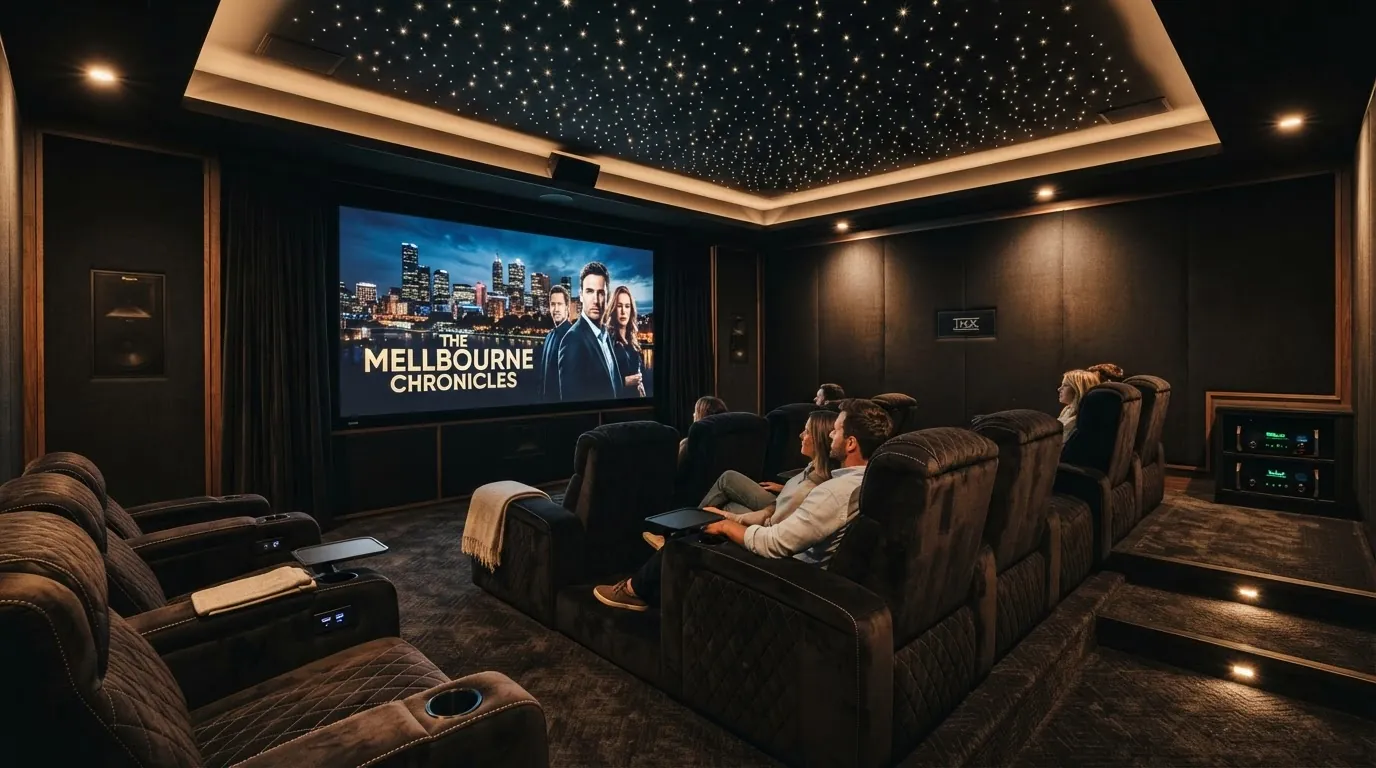
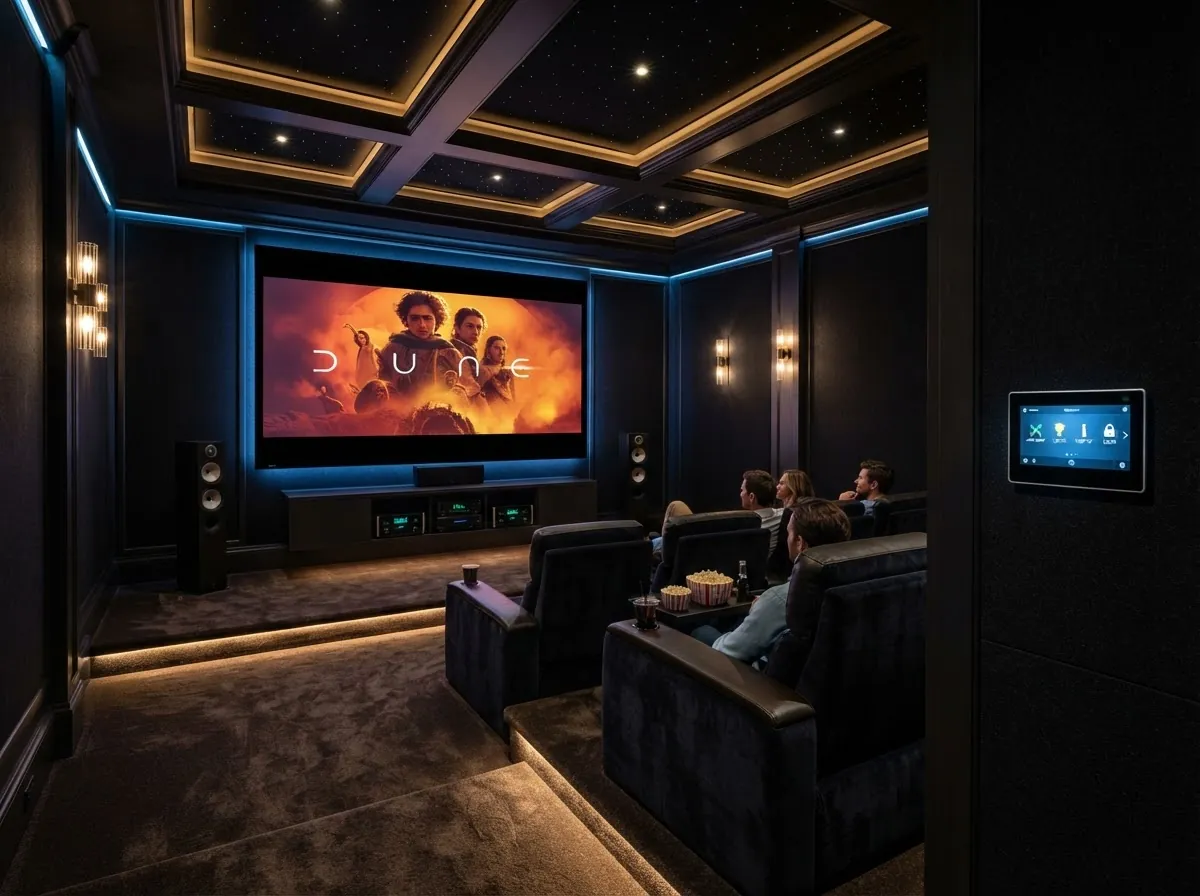
You can buy the best projector, the best speakers and the best screen and still end up with a disappointing cinema. The room is the problem. Speaker placement that does not match the seating, a screen size that is wrong for the throw distance, acoustic reflections that muddy the dialogue. None of these are fixed by spending more on equipment. They are fixed by designing the room as a system.
Speaker Placement for Dolby Atmos
In-wall and in-ceiling speakers from Klipsch or Triad project sound around and above the listening position without cluttering the room. We plan the placement based on the room dimensions and seating layout, not a generic template. The subwoofers go where the room actually reinforces low frequencies, which is not the same place in every room.
Dolby Atmos adds a height layer to the sound field. Speakers above the listening position create a sense of space that a flat 5.1 or 7.1 system cannot match. But the placement matters. Angled in-ceiling speakers aimed at the seating position sound different from down-firing ones. The right choice depends on the ceiling height and the room shape, and it should be decided before the plaster goes on.
The seating position is the reference point. Everything is measured from there. The left and right speakers form an equilateral triangle with the seat. The centre channel, which carries dialogue, is aimed directly at the seated listener's ear height. Get this wrong and dialogue becomes hard to follow, no matter how much you spend on the centre speaker.
If you are also planning multi-room audio for the rest of the house, our multi-room audio page covers how we design whole-home sound alongside a dedicated cinema.
Choosing the Right Projector and Screen
The projector and screen need to match the room and each other. Throw distance, the distance from the projector lens to the screen, determines where the projector can live. A room with a long throw can use a standard lens. A shorter room might need a short-throw projector or a different screen size.
Screen size is not about getting the biggest one that fits. It is about the right size for the seating distance. Sit too close to a screen that is too large and the image feels overwhelming and the pixels visible. Sit too far from a screen that is too small and the cinema feel is lost. There is a recommended range for each seating distance, and we size the screen to sit in it.
Laser projectors have replaced lamp-based ones in most dedicated cinema installs. They hold their brightness longer, do not need lamp replacements, and start instantly. The image quality is consistent over years rather than dimming gradually as a lamp ages.
Room Acoustics and Treatment
Acoustic treatment is what turns a room with good equipment into a room that sounds good. Bare parallel walls create reflections that smear the sound. Hard floors add a harshness to the high end. The room needs a balance of absorptive and diffusive surfaces so the sound is clear without being dead.
This does not mean covering every wall in foam panels. It means placing absorption at the first reflection points, the spots on the side walls where sound bounces directly to the seating position. It means using a rug or acoustic flooring to control floor bounce. It means managing the rear wall so bass does not build up and muddy the low end.
The room within a room approach, where the cinema walls are isolated from the main structure, stops sound leaking into the rest of the house and keeps the cinema quiet from outside noise. This is more involved and usually planned at the build stage. We can advise on what is practical for an existing room versus a new build.
One-Touch Cinema Scenes with Control4
Pressing Movie Night on a Control4 Halo remote does a sequence of things: dims the architectural lights, closes the motorised blackout drapes, fires up the projector, sets the audio receiver to the right input and volume, and drops the screen. One press, and the room is ready.
This is where the cinema stops being a collection of remotes and becomes a room that responds. You do not dim the lights, then close the blinds, then switch on the projector, then find the right input. You press one button and the room transforms. That is the experience a dedicated cinema should deliver, and it is what Control4 integration provides.
The scenes are programmed to your habits. Movie Night for films. Sports for a brighter image and louder crowd. Presentation mode if the room doubles as a screen for a meeting. The lighting, the drapes and the audio all follow the scene you choose. See our home theatre and TV integration page for more on how we design these scenes.
Lighting and Blackout Control
Lighting control is part of the cinema, not an afterthought. Dimmable architectural lighting lets you set the room to a low level for films without being completely dark. Step lighting along the floor makes it safe to move during a film without flooding the room with light. The drapes need to close fully to control ambient light, which affects perceived contrast and image quality.
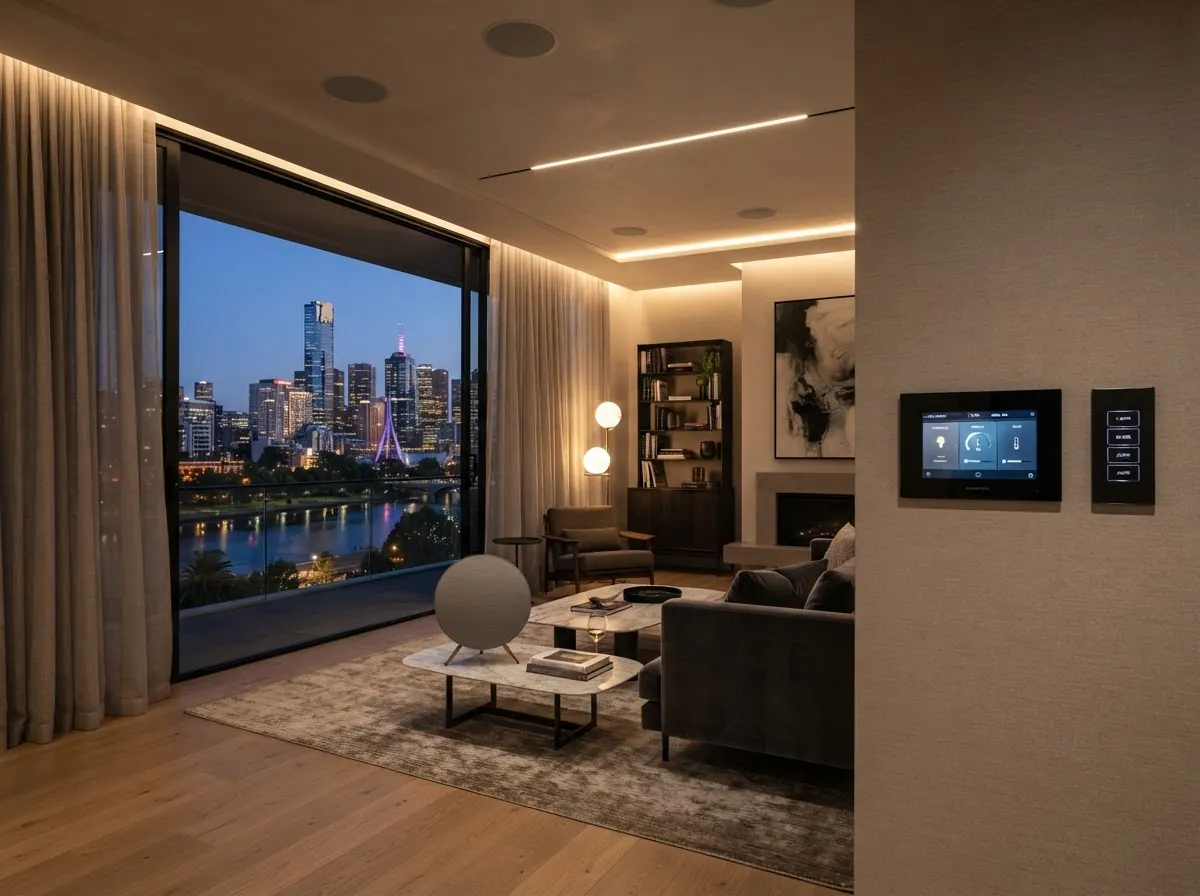
If you want automated blind control as part of the cinema or elsewhere in the house, our blinds and curtain control page covers the motorised options we install.
Planning the Room Before You Build
The cinema should be designed before construction, not after. Speaker placement, cable runs, projector mounting, acoustic treatment and blackout control all depend on the room dimensions and layout. Getting these right during the build means the finished cinema performs. Leaving them until after means compromises.
If you are building in Kew or renovating in Hawthorn, bring the cinema design in early. The ceiling height, the wall positions and the room proportions all affect what is possible. A room designed as a cinema from the start sounds and looks better than a room adapted to be one.